

When Copies Replace Truth: Baudrillard’s Hyperreality in Cult Film
An exploration of six cult classic films through the lens of “reality by proxy”

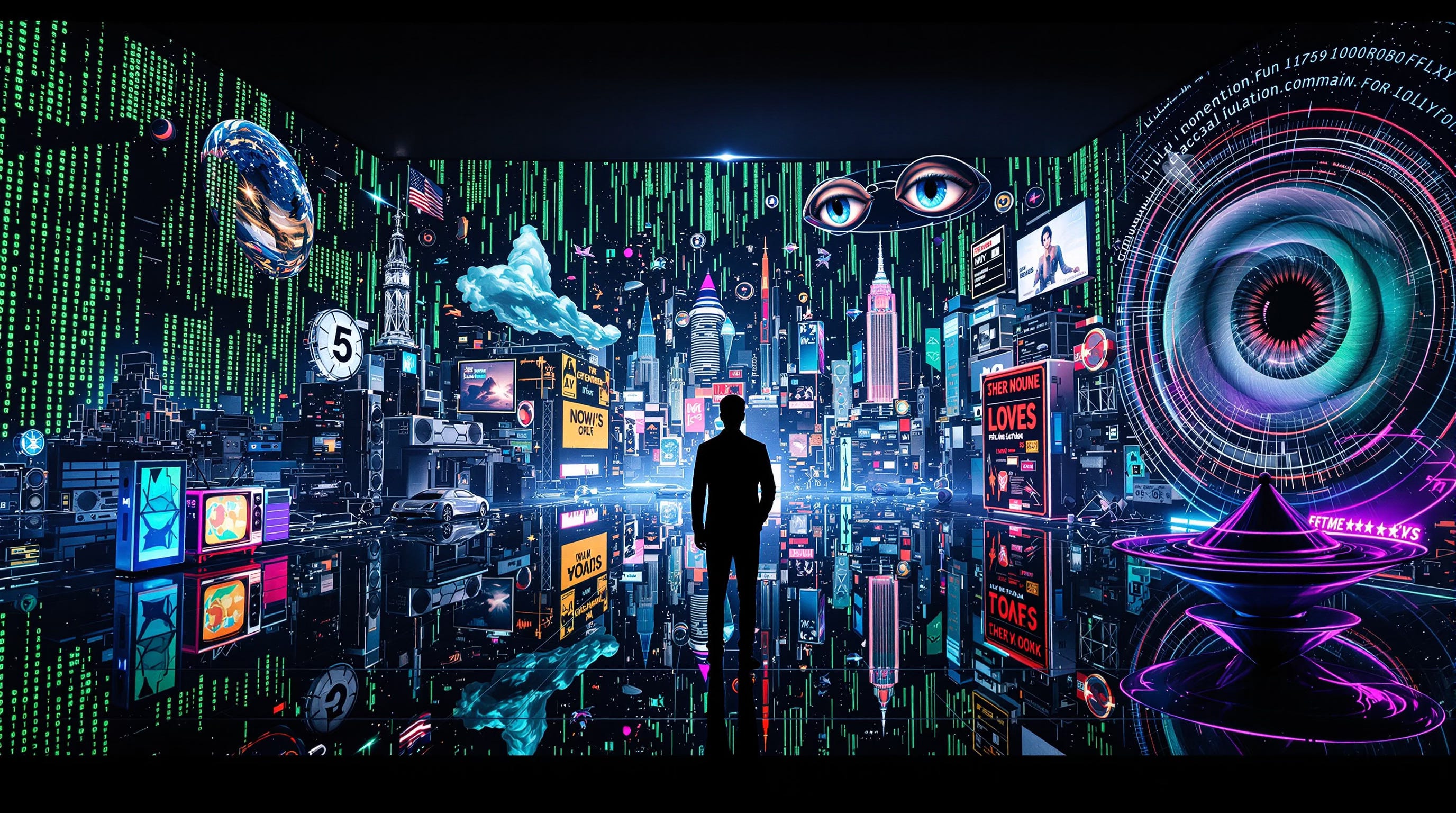
Cult and classic films act as cultural prisms refracting Jean Baudrillard’s theory of hyperreality. In Baudrillard’s terms, hyperreality is the condition in which reality is encountered only by proxy
These 6 films operationalize the concept of “Hyperreality” by illustrating how media, technology, and ideology construct layered simulacra that eclipse direct experience. Through narratives of artificial paradises, orchestrated spectacles, and fractured identities, they visualize Baudrillard’s assertion that signs and symbols no longer reference reality but generate their own self-referential systems.
“Reality by proxy” describes a world in which media-made illusions, rather than firsthand experience, shape how we see everything, leaving us wandering a maze of reflections. By spotlighting this loss of authenticity, the films warn that if spectacle replaces substance, we will both build and be trapped inside our own hyperreal creations.
The Matrix (1999)
Baudrillard’s Simulacra and Simulation appears on‑screen for a reason: Neo’s world is pure code, a “desert of the real” where human perception is harvested and fed back to its owners, proving that signs can outlive the substance they once described.
The Truman Show (1998)
Truman’s hometown is a studio set that predates his own memories; the broadcast image defines what “authentic” means, illustrating Baudrillard’s precession of simulacra in which representation comes first and reality trails behind.
Videodrome (1983)
Television signals bleed into flesh and architecture, collapsing any barrier between screen and street and fulfilling Baudrillard’s claim that hyperreality not only depicts but remakes the physical world.
Blade Runner (1982)
Replicants and their memories are “copies without originals,” and the neon drizzle of Los Angeles is equally synthetic, so neither characters nor audience can locate a stable line between organism and artifact.
Wag the Dog (1997)
A fake war staged for television gains political force precisely because it never happens, echoing Baudrillard’s sardonic thesis that certain conflicts exist only as media events yet still guide real policy and emotion.
Inception (2010)
Nested dreamscapes seduce characters who can no longer trust whether they are awake; Mal’s fatal choice shows how a simulation that offers coherence can eclipse the messier world outside.
Collectively these films crystallize Baudrillard’s warning: when simulations attain primacy, humanity becomes both architect and captive of its hyperreal labyrinth.
Missed any of your favorite films? Let me know!